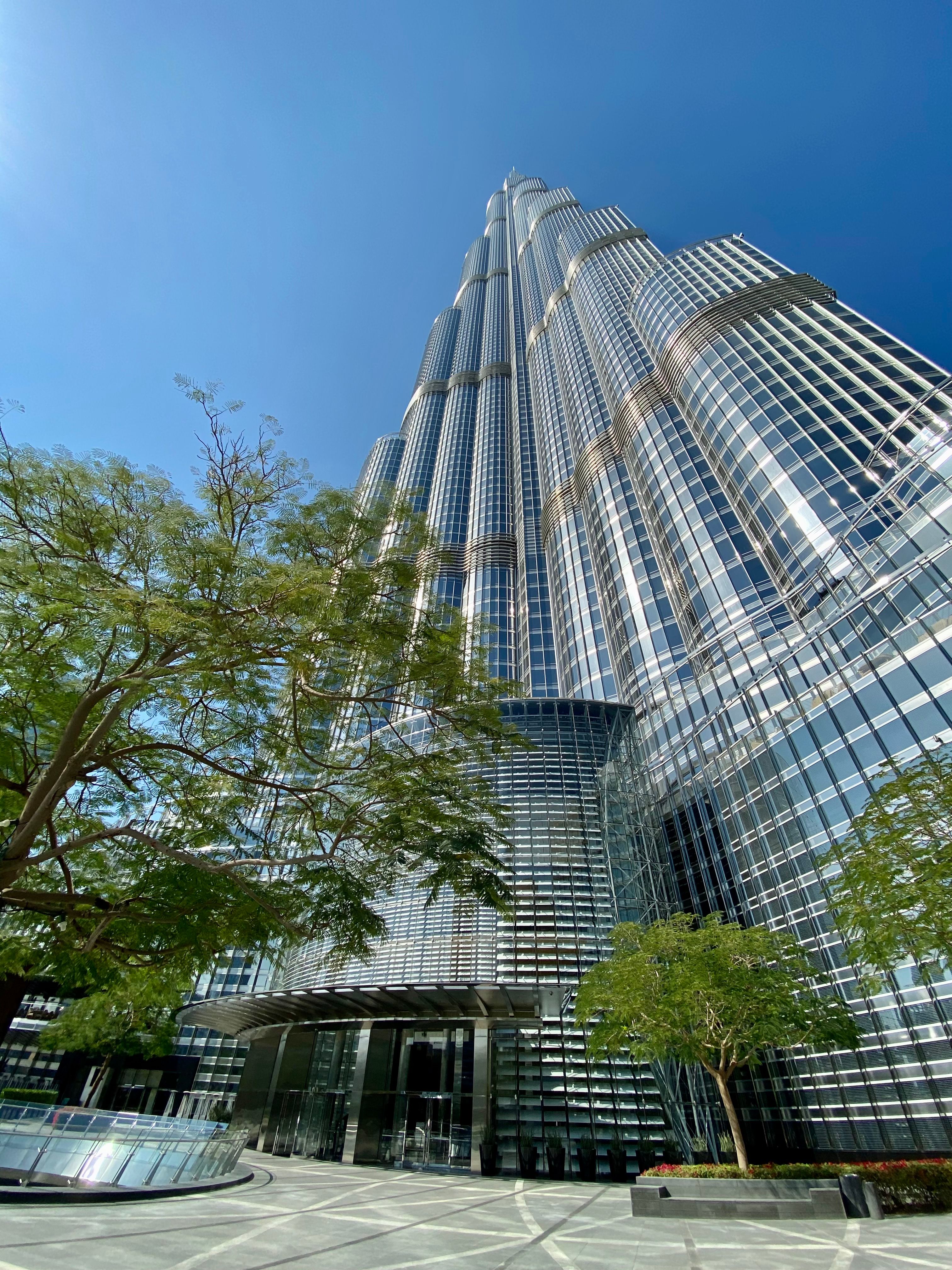
The completed Burj Khalifa tower rising against a clear blue sky in Dubai — the world's tallest building, whose foundation took fifteen months to build before a single visible floor appeared above ground.
The Burj Khalifa in all its glory. What you see took fifteen months of invisible foundation work before it could rise above the ground. Photo: Pexels (free licence).
Governed AI

The Tower You Can See Was Never the Hard Part

Every business racing to "do AI" is trying to build the tower without doing the fifteen months first. The foundation work isn't caution for its own sake — it's building for the size the business is going to become.

Phillip LlewellynFounder, Human Heartbeat AI7 min read
Governed AIHuman Decision Gate

In January 2004, work began on what would become the tallest building on Earth.

For fifteen months, nothing rose above the ground. Crews excavated below ground, installed a piled-raft foundation through deep layers of relatively weak calcareous ground, and built the substructure for a tower nobody could yet see.

It wasn't until March 2005 that the Burj Khalifa broke the surface. From there, the visible tower rose fast — 50 storeys in sixteen months. Impressive, photographable, the kind of progress people point cameras at.

But the foundation took almost as long to build as the first 50 floors did. Unseen. Unphotographed. Done anyway, because the people building it knew exactly what the visible tower would eventually demand of it.

Most AI Adoption Skips the Fifteen Months

Every business now racing to "do AI" is trying to build the tower without doing the fifteen months first.

It's not hard to understand why. The tower is what gets seen. A pilot, a demo, a slide in the board pack — that's the part people photograph. Nobody applauds a business for spending months defining who is accountable when the AI is wrong, or what happens when an AI Worker's recommendation needs a human to actually decide. That work doesn't rise above the surface. It doesn't make a good screenshot.

So most businesses skip it. They pour the AI straight onto the surface and start building up, because building up is what everyone can see and measure.

For a while, it works. The pilot runs. The demo impresses. Floors go up fast.

Then something shifts weight it was never built to carry, and there's nothing underneath to hold it.
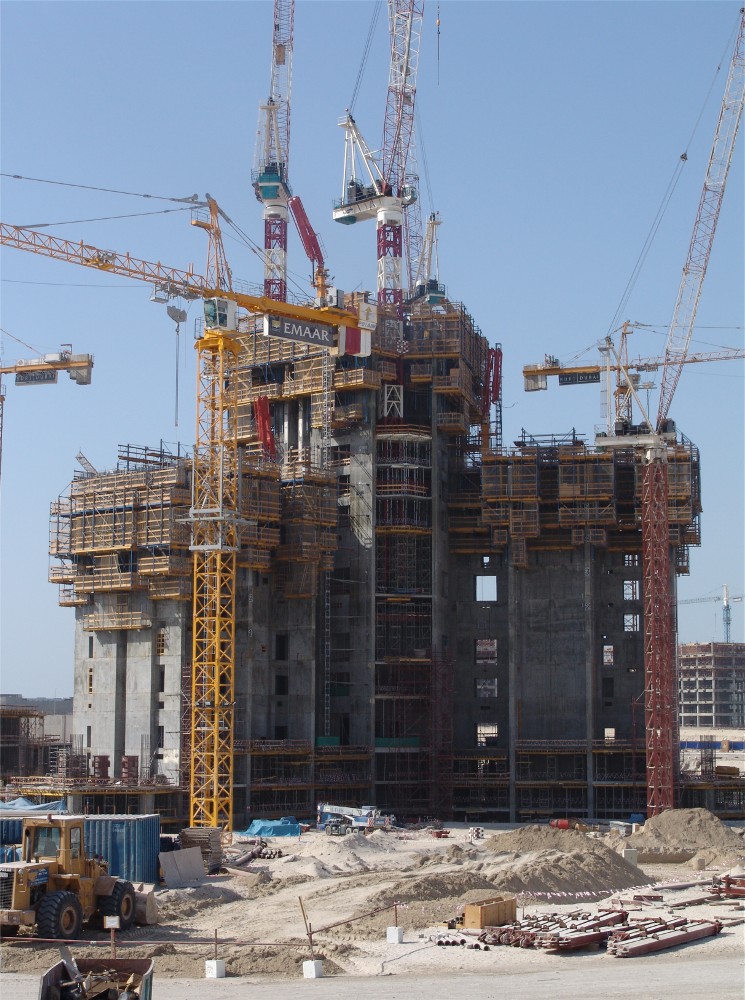
The Burj Khalifa construction site in October 2005, showing the earliest above-ground structure surrounded by cranes and construction equipment on bare desert ground.
October 2005 — The First Floors Break Ground: October 2005: the first floors rise above the surface. The foundation work had already been underway for over a year. Photo: Soonadracula / Wikimedia Commons (public domain).

What the Fifteen Months Actually Buys You

The Burj Khalifa's foundation wasn't built because someone liked digging. It was built because the engineers already knew, before a single visible floor existed, exactly how tall the tower would eventually be — and they built for that height from day one, not for the height they'd reached so far.

That's the part worth sitting with. Foundation work isn't caution for its own sake. It's building for the size the business is going to become, not the size it currently is.

At Human Heartbeat AI, this is the whole starting principle: AI advises. The human decides. Every AI Worker in the system operates inside that boundary — it can surface information, draft a recommendation, flag a risk. It cannot authorise itself. It cannot file, route, close, or escalate a real-world action without a named person choosing to let it, on record.

That boundary gets built before the visible business does. Not because it looks impressive in a pitch deck — it doesn't, in the same way fifteen months of digging never made anyone's Instagram — but because it's the only thing that lets the visible business grow taller without the whole thing becoming unstable at height.
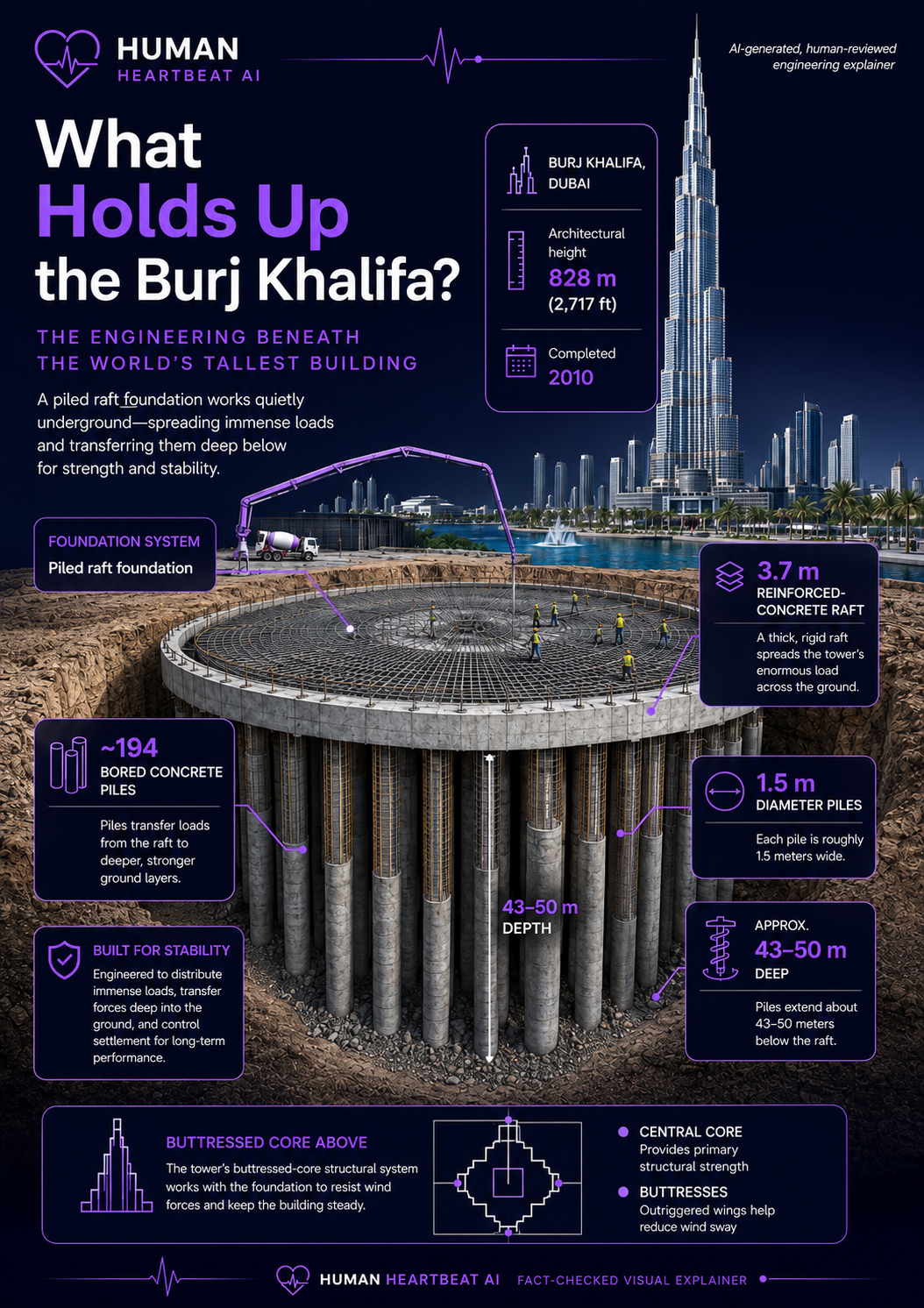
Infographic showing the engineering beneath the Burj Khalifa: piled raft foundation system, approximately 194 bored concrete piles, 1.5 m diameter, 43–50 m deep, and a 3.7 m reinforced-concrete raft — the invisible structure that carries the world's tallest building.
What Holds Up the Burj Khalifa?: The engineering beneath the surface — foundation system, pile depth, and load-bearing structure. Original graphic, Human Heartbeat AI.

Depth Before Height

There's an old piece of advice that says the deeper you dig, the bigger what you build is allowed to become. It's true of towers. It's equally true of teams, and of businesses built around AI.

Train people properly before you need them to carry weight. Build accountability into the structure before the structure is under any real pressure. Get the foundation right when nobody's watching, so that when people are watching — when the business is bigger, when the stakes are real, when a mistake would actually cost something — there's something underneath holding it up.

Winners dig the fifteen months. Quitters skip straight to the photograph.
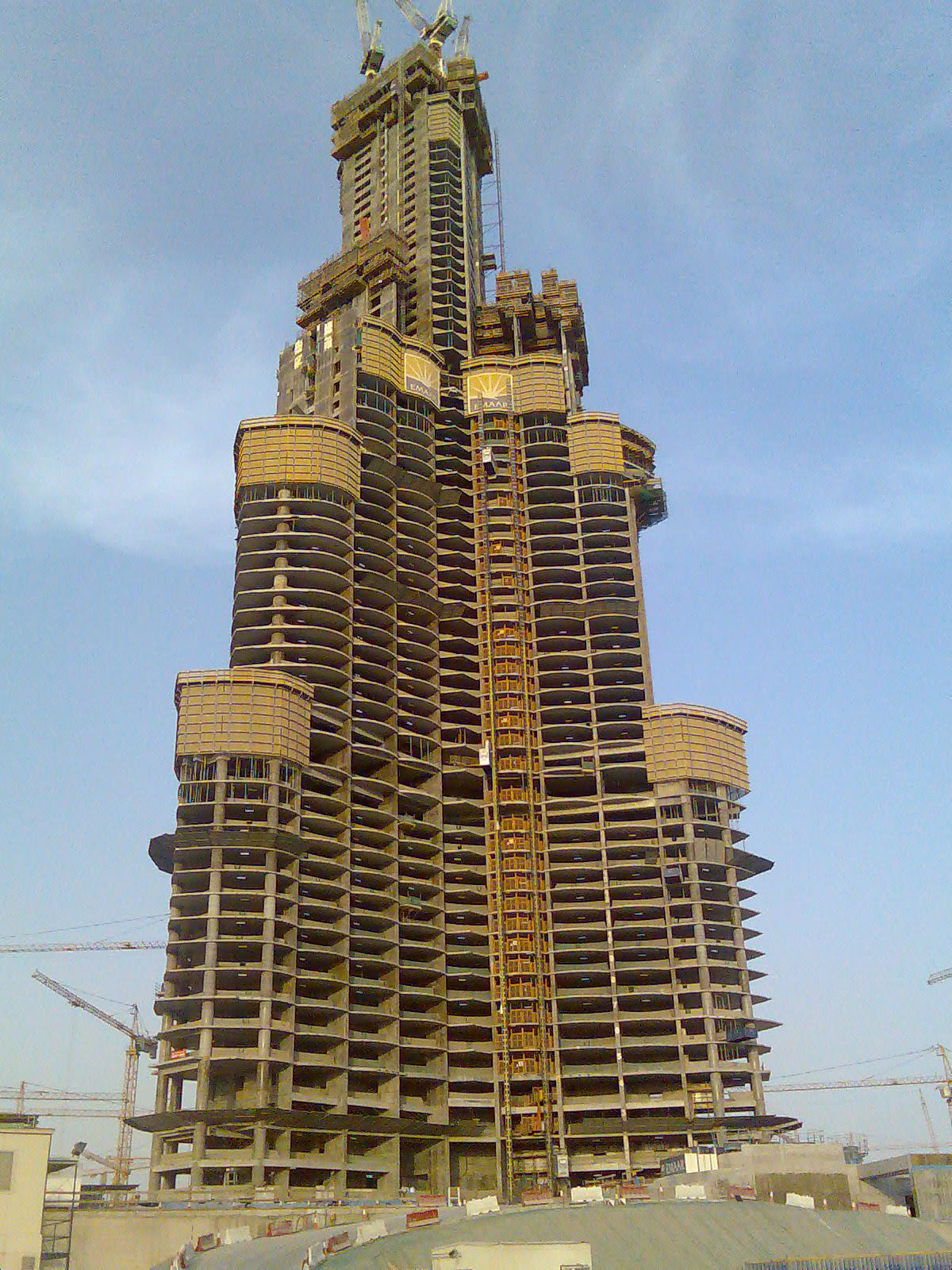
The Burj Khalifa under construction in August 2006, showing the distinctive stepped silhouette of the tower taking shape with scaffolding and construction platforms visible.
August 2006 — Fifty Storeys and Climbing: August 2006: the visible tower rising fast — fifty storeys in sixteen months once the foundation was done. Photo: Dubai resident 06 / Wikimedia Commons (public domain).

Questions answered in this article

Why does responsible AI adoption take longer than a typical pilot?
Because a pilot only has to demonstrate that an AI can produce a useful output. A properly governed system also has to define who is accountable for every AI action before it happens — work that takes time and isn't visible in a demo.
What is a Human Decision Gate?
A Human Decision Gate is the principle that AI systems may advise, recommend, and draft — but a named human must authorise before any output becomes a real business action.
Why do some AI investments hold up under pressure while others don't?
Because the businesses that hold up built accountability and review into the system from the start, even though that work isn't visible — in the same way a skyscraper's foundation is built to the building's eventual height, long before the building exists.
Does slowing down at the start of AI adoption put a business at a disadvantage?
No — it's the opposite. Businesses that skip foundational governance work can move faster at first, but have nothing underneath them once the AI is handling decisions that actually matter.

Share this article

← Back to Articles

Choose your next useful place

Take the idea somewhere useful.

Continue through established public resources. These links do not add you to a list or start an automated journey.

Read Founder NotesHear the Founder’s perspective in full.
Go there
See today’s AI evidenceExplore the approved Breaking Stories archive.
Go there
Explore the ecosystemReturn to the wider map of routes.
Go there