
These are different settings. But each moves the conversation away from a model in isolation and towards the operating system around it.
The practical point is simple: an AI system becomes consequential not only because of what it can do, but because of the decisions, data, dependencies and people around it.
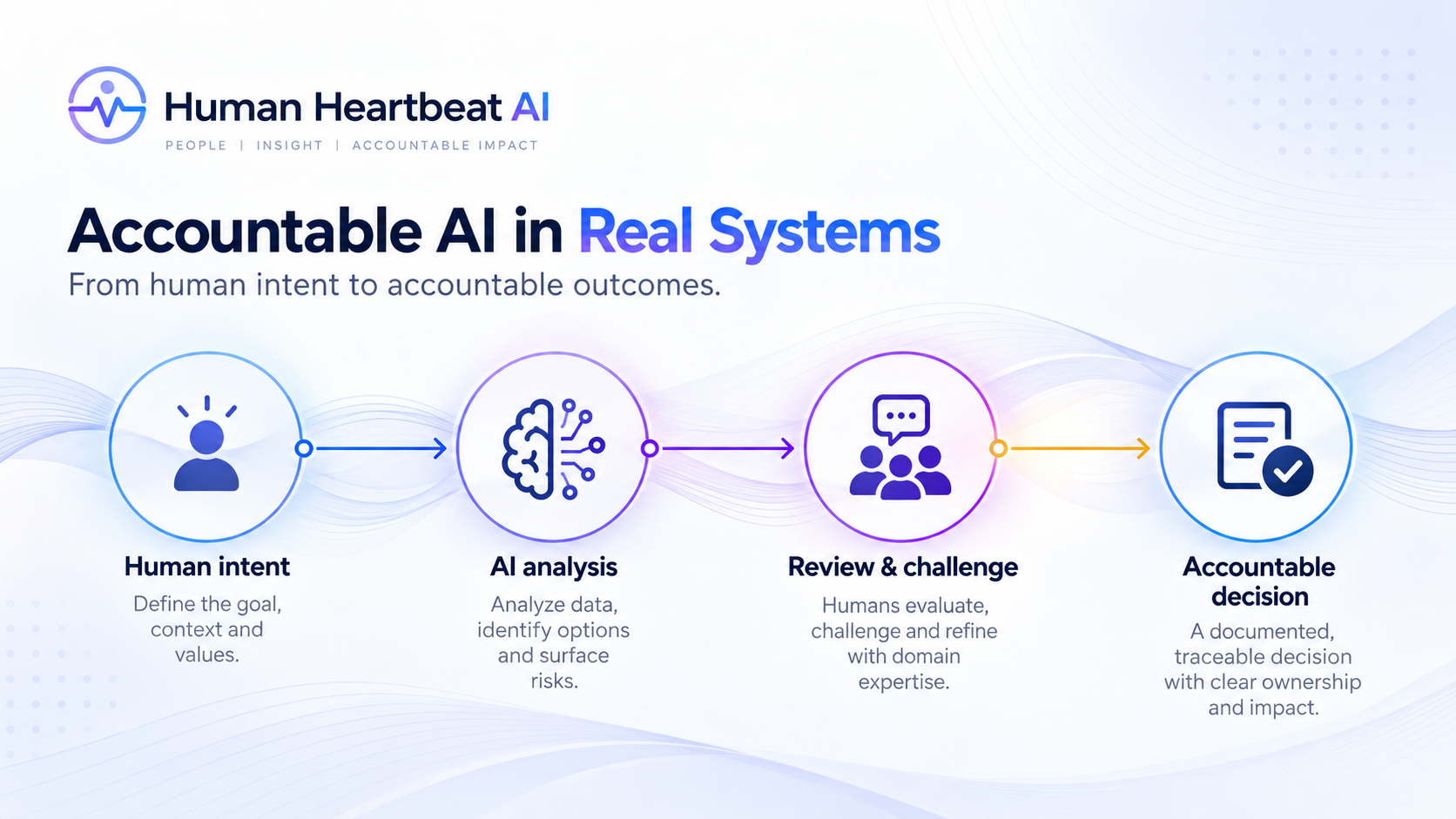
Evidence in practice
Read the signal. Keep the decision human.
This reader guide does not add a score, prediction, recommendation or automatic next step.
What leaders should review
Before calling an AI system useful or safe, ask what problem it is solving, who is accountable, what data and dependencies it relies on, what happens when it is wrong, and who can intervene before a consequence reaches a person.
What remains a human decision
Whether any of these signals are relevant to your organisation, what evidence is sufficient for your setting, and whether a change to governance, practice or technology is justified. An AI briefing can make evidence visible; a responsible person decides what follows.
The FCA says accountable AI practice begins before deployment
On 19 October 2026, the Financial Conduct Authority published examples of good practice and areas for improvement in firms’ use of AI. Existing financial-services rules apply, and its observations centre on consumer outcomes, governance and accountability, human oversight, operational resilience and third-party relationships.
The practical point is that governance should not be fitted around an AI system after deployment. Responsibility, risk-based controls, monitoring, escalation routes and human oversight need to be in place before the technology becomes consequential. That includes understanding supplier dependencies and maintaining fallback options.
Human Heartbeat AI focus
A human review step is not meaningful merely because a person is present. The responsible person needs defined authority, enough context to challenge the output, a route to escalate concern and the ability to stop or correct the process.
Founder’s watchpoint
Do not wait for an AI system to fail before deciding who owns it, what must be monitored and where a person can intervene.

UK science advisers say AI agency begins with knowing the dependencies
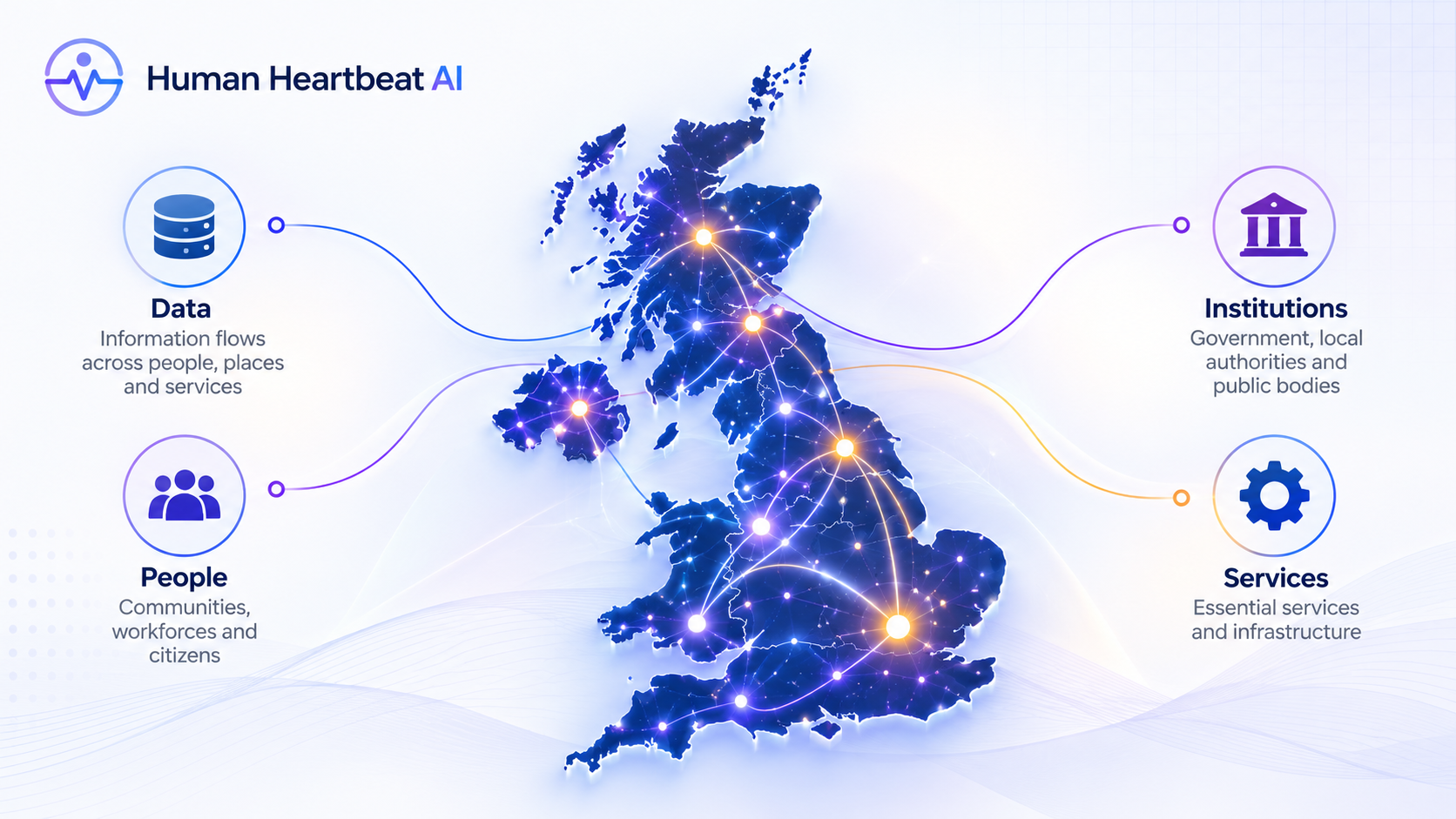
Also on 19 October, the Council for Science and Technology advised Government to develop a UK AI Sovereignty Plan, beginning with a practical map of the AI ecosystem: computing power, data, skills, models, governance, adoption, dependencies and gaps.
The argument is not that every capability must be built domestically. It is that Government should know where dependence is acceptable, where resilience matters and where the UK needs the capability to make an informed choice. Proposed public-interest pilots would have to answer six questions: what problem is being solved, what data is held, what model capability is needed, what wider system must be built around it, what value can be captured and how success will be measured.
Human Heartbeat AI focus
A model is never the whole system. Human capability, data custody, supplier reliance, operating conditions and the ability to change course all sit around it.
Founder’s watchpoint
Dependency is not automatically a problem. Unseen, untested or ungoverned dependency is.
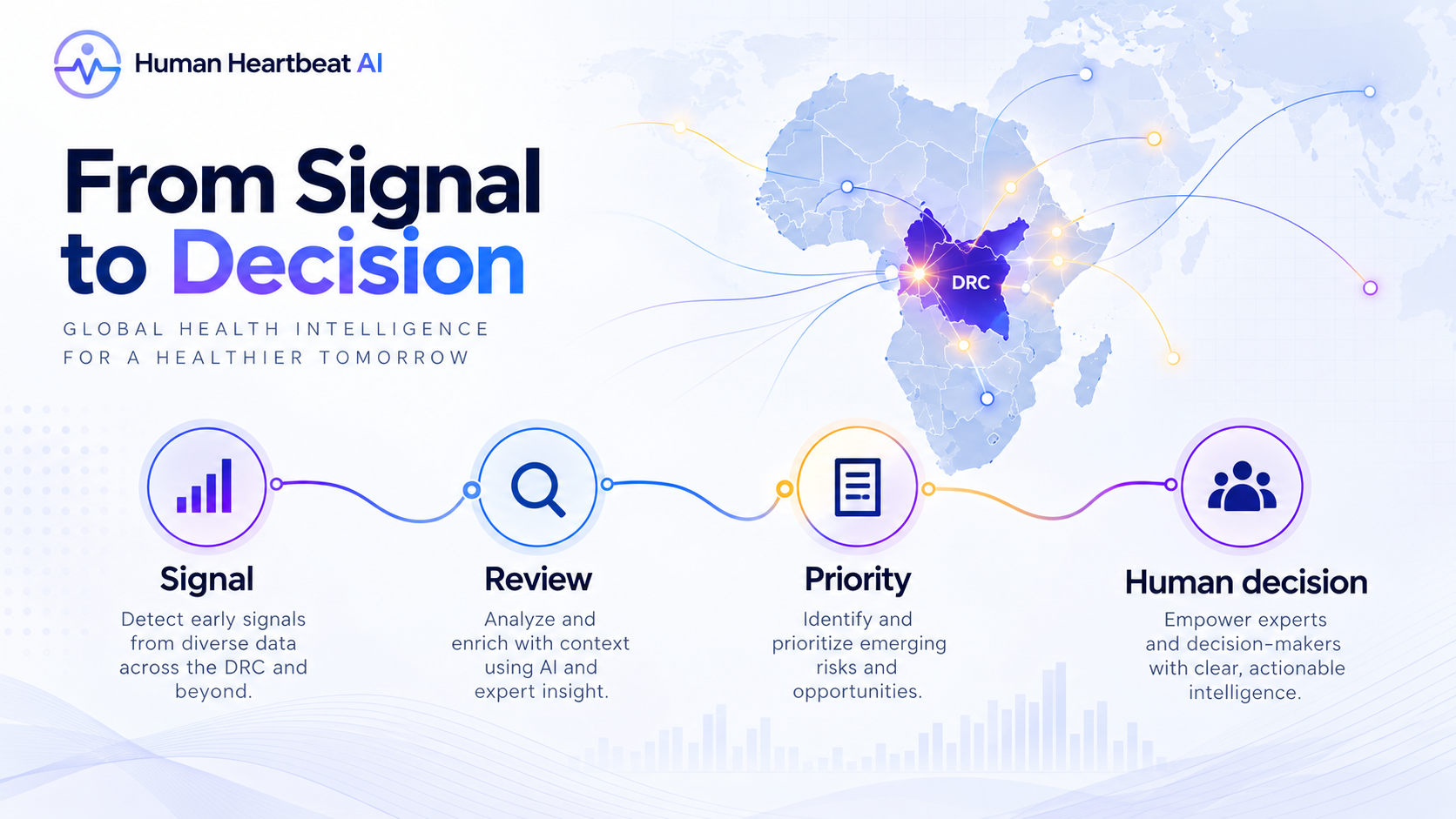
WHO deploys AI-supported epidemic intelligence in the Democratic Republic of the Congo
On 19 October, WHO’s Regional Office for Africa reported that its Preparedness Data Exchange platform is now in use in the Democratic Republic of the Congo. WHO describes it as the first country deployment, connected to a regional system serving 47 Member States.
WHO says the platform uses AI to bring together health and risk information, supporting earlier identification of potential threats, in the context of the country’s Ebola response and cross-border health risks. This is a reported deployment, not evidence that AI has solved a public-health problem. Signals still have to be assessed by accountable public-health teams and turned into human decisions.
Human Heartbeat AI focus
The useful distinction is between AI that supports situational awareness and AI that silently substitutes for accountable judgement. Early-warning technology only matters if people can understand the signal, assess it in context and act responsibly.
Founder’s watchpoint
A faster signal is not the same as a better decision.
Full analysis
Dig deeper into the evidence
Read the full analysis ↓Direct evidence
The FCA’s publication is based on industry engagement, supervisory work and its AI Lab initiatives. It does not create a new standalone AI rulebook, but makes clear that existing consumer, governance, resilience and redress requirements apply to firms using AI.
The Council for Science and Technology’s advice is directed to Government. It recommends an AI Sovereignty Plan, coordination through a clear accountable owner, investment in long-term capability and resilient access to leading AI models. It is advice, not an adopted Government programme.
WHO states that its Preparedness Data Exchange has been deployed in the Democratic Republic of the Congo to connect health and risk information for epidemic preparedness. The announcement does not provide an independent performance evaluation, error rates, detailed data-governance arrangements or measured health outcomes.

Responsible inference
The common lesson is not that one sector’s rules should be copied into another. It is that high-consequence AI needs an operating environment that makes responsibility, dependencies, evidence and intervention visible.
Why the distinction matters
A system can appear impressive and still be poorly governed. It may rely on unclear data sources, hidden supplier dependencies, weak monitoring, nominal human review or no practical route to correct an error.
The better question is not simply whether AI can act. It is whether a responsible person can understand the operating boundary, recognise a failure, challenge the output and decide what happens next.

What the evidence does not prove
These records do not prove that financial firms have adopted effective controls, that the UK Government will implement the Council’s recommendations, or that WHO’s platform improves preparedness or public-health outcomes.
They do not certify any AI product, establish a universal governance framework or remove the need for human judgement in a particular setting.
Sources
- Financial Conduct Authority — AI in financial services: good practice and areas for improvement ↗
- Council for Science and Technology — AI sovereignty: preserving UK agency in an AI-enabled world ↗
- World Health Organization Regional Office for Africa — WHO deploys PDX preparedness intelligence platform in the Democratic Republic of the Congo ↗